
When choosing a name for a child, many parents look for more than a beautiful sound. They want a name that carries hope, reflects their values, and connects with their faith. Ella is one such name. It is short, graceful, and popular in many parts of the world. But what does Ella mean in the Bible? Is Ella a biblical name, and does it have a spiritual meaning?
The answer requires a little care. Ella is not clearly established as a personal name in the Bible, and Scripture does not give it a specific spiritual meaning. However, the name has connections to several naming traditions, including meanings associated with light, beauty, and other positive qualities. It is also worth exploring its possible relationship to biblical names and Hebrew words without confusing tradition with what the Bible actually teaches.
In this guide, we will explore the origin of Ella, whether it appears in Scripture, its possible Christian significance, and Bible verses that connect with the values parents may associate with the name. You will also discover how Christians can choose and use a name thoughtfully while keeping their faith rooted in God’s Word.
The goal is not to invent a biblical meaning for Ella, but to understand what is known and find genuine encouragement in Scripture.
What Does Ella Mean in the Bible?

The name Ella has several possible origins, so its meaning depends on the language and naming tradition being considered.
In some Hebrew naming traditions, Ella is connected with the Hebrew word elah, which refers to a terebinth tree. This is a tree native to the eastern Mediterranean region. Some Bible translations render the related Hebrew word as “oak” or “terebinth.” The connection makes Ella interesting for readers who appreciate biblical nature imagery.
Bible Hub
+1
However, it is important to understand the difference between a name’s linguistic roots and its spiritual meaning. The Bible does not directly state that Ella means “God’s light,” “blessing,” or “chosen by God.” Those may be attractive personal associations, but they should not be presented as established biblical definitions.
Is Ella a Biblical Name?
Ella is not a prominent personal name in the Bible. However, the similar Hebrew form Elah does appear in Scripture.
In 1 Kings 4:18, Elah is mentioned as the father of Shimei, one of the officials associated with King Solomon’s administration. The name Elah is also connected with the Hebrew word for a terebinth tree.
Abarim Publications
+1
There is another important connection: the Valley of Elah is the setting of David’s encounter with Goliath in 1 Samuel 17. This geographical name is associated with the terebinth tree, not with a woman named Ella.
Therefore, the most accurate conclusion is that Ella is a modern given name with a possible Hebrew connection to the biblical word elah, rather than a clearly identified biblical woman’s name.
Christians can still choose Ella for a daughter. A name does not have to belong to a famous biblical character to be meaningful within a Christian family.
Ella Meaning in Hebrew
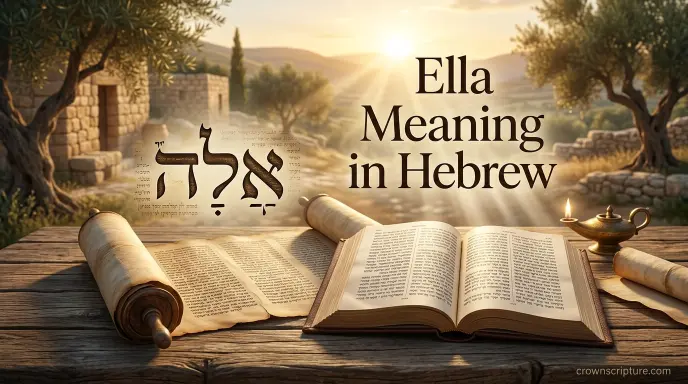
The Hebrew word elah (אֵלָה) refers to a terebinth tree and is sometimes translated as oak. The precise relationship between similar Hebrew forms and personal names can be complex, so it is best not to assume that every modern spelling has exactly the same origin.
The Hebrew connection gives Ella a possible association with the natural world described in the Old Testament. Trees were familiar parts of everyday life in ancient Israel. They provided shade, marked locations, and sometimes appeared in accounts of worship and important events.
The connection is linguistic, however, rather than a direct promise about anyone who bears the name.
What Is the Spiritual Meaning of Ella?
Although Scripture does not assign Ella a specific spiritual meaning, Christian parents may connect the name with biblical themes such as:
- Strength: depending on the tree association, Ella can remind a family of the strength and endurance of God’s creation.
- Growth: the image of a healthy tree can point toward a life nourished by God’s Word.
- Faithfulness: a person can grow in faith by learning Scripture and putting it into practice.
- Hope: a name can become a reminder to trust God during changing seasons of life.
- Purpose: every child can be encouraged to develop gifts, serve others, and grow in love.
These are devotional applications, not official definitions of the name. The distinction matters because Christians should build their faith on what Scripture teaches rather than on claims about a name that the Bible never makes.
Ella is a beautiful feminine name with several possible linguistic origins.
In English-speaking countries, Ella is often used as a standalone name or a shortened form of longer names.
Ella is sometimes associated with meanings such as light, beautiful fairy, or other interpretations depending on its origin.
In Spanish, ella is a pronoun meaning she.
The name Ella does not appear as a personal name in the Bible in most common English translations.
Ella is not traditionally recognized as a Hebrew biblical name.
Some people connect Ella with the biblical name Elah, but the two names should not automatically be treated as identical.
Elah appears in the Bible as a personal name and is also associated with the Hebrew word for an oak or terebinth tree.
The biblical meaning of a name should be distinguished from its modern cultural or linguistic meaning.
Although Ella is not a biblical name, Christian parents may choose it because of its beauty and simplicity.
Parents can connect the name Ella with biblical values such as kindness, wisdom, grace, and love.
Scripture teaches that a person’s character and actions matter more than the name they carry.
Proverbs 31:26 highlights the importance of wisdom and kindness in a person’s words.
Families choosing Ella can give the name personal Christian significance by raising their child in faith, love, and compassion.
Understanding Ella Through the Bible
Names mattered in biblical culture. They could reflect family history, personal experiences, hopes, or important events. In some accounts, God gave a person a new name to mark a significant change in that person’s life.
For example, God changed Abram’s name to Abraham in Genesis 17:5. The change was connected with God’s covenant promise concerning Abraham’s descendants. Likewise, Jacob was given the name Israel in Genesis 32:28 after wrestling through a defining encounter.
These examples show that names could carry deep meaning in Scripture. They do not mean that every modern name has a hidden message from God.
The Old Testament also uses trees and plants in several ways. Some trees provide shade or mark a place. Others appear in poetry and prophecy as pictures of human life, judgment, or renewal. These images help readers understand spiritual truths through familiar parts of creation.
The New Testament continues this practice. Jesus used seeds, vines, and branches to explain the kingdom of God, the growth of faith, and the importance of remaining in Him. His illustrations were drawn from ordinary life, making spiritual lessons easier to understand.
For someone named Ella, these passages can provide meaningful material for reflection. A family might use the name as a reminder to grow in wisdom, remain rooted in faith, and show kindness to others. Yet the spiritual lesson comes from Scripture, not from a claim that the name itself carries supernatural power.
This is a helpful principle for Christian name studies: explore the history honestly, appreciate meaningful connections, and let God’s Word guide the application.
Best Bible Verses Connected to the Name Ella
The following verses do not mention Ella as a personal name. Instead, they connect with themes that a Christian family might associate with Ella, especially trees, growth, wisdom, strength, love, and faithfulness.
The quotations below use the King James Version (KJV). Each passage has its own context, so its meaning should be understood before applying it to a modern name.
1. Psalm 1:3 — A Life Rooted in God’s Word
And he shall be like a tree planted by the rivers of water, that bringeth forth his fruit in his season; his leaf also shall not wither; and whatsoever he doeth shall prosper.
What this verse means: Psalm 1 contrasts the person who delights in God’s law with those who reject His guidance. The tree illustrates stability, nourishment, and fruitfulness. Its health comes from a steady source of water.
Life application: Ella can serve as a family reminder to build life around Scripture. Spiritual growth often takes time, and faith becomes stronger through prayer, obedience, and daily trust in God.
2. Jeremiah 17:7–8 — Trusting God in Difficult Seasons
Blessed is the man that trusteth in the LORD, and whose hope the LORD is.
The following verse compares this person to a tree planted near water.
What this passage means: Jeremiah contrasts trust in human strength with trust in the Lord. The tree remains nourished even when heat and drought come. Its strength is not based on perfect circumstances.
Life application: A person named Ella can be encouraged to trust God through both joyful and difficult seasons. Faith does not mean that hardship disappears. It means learning where lasting hope is found.
3. Isaiah 61:3 — Trees of Righteousness
that they might be called trees of righteousness, the planting of the LORD, that he might be glorified.
What this verse means: Isaiah describes God’s work of restoration among people who have experienced sorrow and loss. The image of trees of righteousness points to lives transformed by God’s grace, bringing honor to Him.
Life application: This verse offers a beautiful prayer for any child: may her character grow in righteousness, and may her life reflect God’s goodness. The goal is not fame or perfection, but a heart shaped by Him.
4. Psalm 92:12 — Growing in Righteousness
The righteous shall flourish like the palm tree: he shall grow like a cedar in Lebanon.
What this verse means: Psalm 92 celebrates God’s faithfulness. The palm and cedar are images of vitality and strength. The psalm later explains that the righteous continue to bear fruit even in old age.
Life application: Spiritual maturity is a lifelong journey. Ella’s family can use this passage to remember that lasting growth comes from knowing God and living faithfully, not from outward appearance alone.
5. Proverbs 3:5–6 — Trusting God’s Direction
Trust in the LORD with all thine heart; and lean not unto thine own understanding.
What this passage means: Proverbs teaches that wisdom begins with reverence for God. Trusting Him means seeking His direction rather than assuming our limited understanding is enough.
Life application: Parents can pray that Ella will learn to seek God’s wisdom as she grows. She can be encouraged to make thoughtful choices, listen to sound advice, and remember God in everyday decisions.
6. Matthew 5:16 — Letting Your Light Shine
Let your light so shine before men, that they may see your good works, and glorify your Father which is in heaven.
What this verse means: In the Sermon on the Mount, Jesus calls His followers to live visibly good lives. Their actions should point people toward God rather than toward personal pride.
Life application: Some families associate Ella with light because of meanings found in certain naming traditions. This verse can be a meaningful Christian connection, but it does not establish that Ella literally means light. Its central lesson is to show goodness that honors God.
7. Galatians 5:22–23 — The Fruit of the Spirit
But the fruit of the Spirit is love, joy, peace, longsuffering, gentleness, goodness, faith,
What this passage means: Paul contrasts the works of the flesh with the fruit produced by the Holy Spirit in a believer’s life. The following part of the passage includes meekness and temperance.
Life application: This is a useful prayer for a child named Ella. Ask God to help her grow in love, patience, gentleness, and self-control. These qualities matter far more than the popularity or sound of a name.
8. John 15:5 — Remaining in Christ
I am the vine, ye are the branches: He that abideth in me, and I in him, the same bringeth forth much fruit: for without me ye can do nothing.
What this verse means: Jesus uses the picture of a vine and its branches to explain dependence on Him. A branch cannot produce fruit when separated from its source of life.
Life application: Christian growth is not simply about trying harder. It involves remaining close to Jesus through faith, prayer, obedience, and love. This passage encourages Ella’s family to make Christ the center of their home.
9. Colossians 2:6–7 — Being Rooted in Christ
As ye have therefore received Christ Jesus the Lord, so walk ye in him: Rooted and built up in him, and stablished in the faith, as ye have been taught, abounding therein with thanksgiving.
What this passage means: Paul encourages believers to continue in the faith they received rather than being led away by misleading teaching. Roots and foundations picture a faith that is grounded and growing.
Life application: A name can be a reminder of a family’s values, but a strong Christian life needs more than a meaningful name. Ella can be taught to know Jesus, understand Scripture, and develop discernment.
10. Ephesians 2:10 — Created for Good Works
For we are his workmanship, created in Christ Jesus unto good works, which God hath before ordained that we should walk in them.
What this verse means: Paul explains that salvation is God’s gift of grace, not something people earn. Those saved by grace are then called to live in ways that reflect God’s purposes.
Life application: Ella does not need to discover a secret destiny hidden in her name. She can learn to follow Christ, use her gifts well, and serve others with humility and love.
11. Philippians 4:8 — Choosing What Is Good
Finally, brethren, whatsoever things are true, whatsoever things are honest, whatsoever things are just, whatsoever things are pure, whatsoever things are lovely, whatsoever things are of good report; if there be any virtue, and if there be any praise, think on these things.
What this verse means: Paul encourages believers to direct their minds toward what is true, honorable, just, pure, and worthy of praise. Christian thinking should be shaped by what reflects God’s goodness.
Life application: Parents can help Ella develop wise habits by teaching her to value truth, choose good influences, and speak with kindness. Her character will be shaped by many daily choices.
12. Micah 6:8 — Walking Humbly With God
he hath shewed thee, O man, what is good; and what doth the LORD require of thee, but to do justly, and to love mercy, and to walk humbly with thy God?
What this verse means: Micah challenges empty religious behavior and calls God’s people to practice justice, love mercy, and walk humbly with Him.
Life application: This verse provides a practical picture of a life that honors God. Ella can be encouraged to treat people fairly, forgive others, and remember that humility is more valuable than status.
13. Numbers 6:24–26 — A Prayer of Blessing
The LORD bless thee, and keep thee: The LORD make his face shine upon thee, and be gracious unto thee: The LORD lift up his countenance upon thee, and give thee peace.
What this passage means: God instructed Aaron and his sons to bless the people of Israel with these words. The blessing expresses God’s care, grace, and peace toward His covenant people.
Life application: Parents can pray this blessing over Ella as an expression of love and faith. It is a prayer rooted in Scripture, not a guarantee that her life will be free from pain or difficulty.
14. James 1:5 — Asking God for Wisdom
If any of you lack wisdom, let him ask of God, that giveth to all men liberally, and upbraideth not; and it shall be given him.
What this verse means: James writes to believers facing trials and teaches them to seek wisdom from God. The wisdom needed is practical discernment to respond faithfully to life’s challenges.
Life application: As Ella grows, she can learn to pray when facing difficult decisions. Parents can model this by seeking God’s guidance rather than expecting to have every answer.
15. Romans 12:10 — Showing Genuine Love
Be kindly affectioned one to another with brotherly love; in honour preferring one another;
What this verse means: Paul describes the practical shape of Christian community. Believers should show sincere affection and honor others instead of competing for attention or importance.
Life application: A meaningful name becomes most valuable when it is accompanied by a loving life. Ella can be encouraged to show respect, include others, and care for people who may feel overlooked.
16. Proverbs 31:26 — Speaking With Wisdom and Kindness
She openeth her mouth with wisdom; and in her tongue is the law of kindness.
What this verse means: Proverbs 31 describes a woman of noble character. Her wisdom appears in both her actions and her speech. Kindness is not weakness; it is a mark of disciplined, thoughtful character.
Life application: This verse is especially fitting for parents praying for a daughter. They can ask God to help Ella grow into someone whose words are truthful, wise, and gracious.
17. 1 Timothy 4:12 — Setting a Good Example
Let no man despise thy youth; but be thou an example of the believers, in word, in conversation, in charity, in spirit, in faith, in purity.
What this verse means: Paul encourages Timothy, a younger church leader, not to let his age prevent him from serving faithfully. His conduct should demonstrate the truth he teaches.
Life application: Ella does not have to wait until adulthood to show kindness, courage, and faith. Young people can honor God through the way they speak, treat others, and respond to challenges.
18. Psalm 139:14 — Thankfulness for God’s Creation
I will praise thee; for I am fearfully and wonderfully made: marvellous are thy works; and that my soul knoweth right well.
What this verse means: David praises God for His intimate knowledge of human life and His wonderful works. The psalm celebrates God’s creative power and personal care.
Life application: This verse can remind Ella that her worth does not depend on beauty, popularity, or the meaning attached to her name. Every person’s dignity comes from being created by God.
19. 2 Timothy 1:7 — Courage Through God
For God hath not given us the spirit of fear; but of power, and of love, and of a sound mind.
What this verse means: Paul encourages Timothy to remain faithful despite opposition and hardship. The verse calls him to courageous, loving, and disciplined service rather than fearful retreat.
Life application: Parents can use this verse to encourage Ella when she faces uncertainty. Christian courage does not mean never feeling afraid; it means learning to respond with faith, love, and sound judgment.
20. Philippians 4:6–7 — Prayer and God’s Peace
Be careful for nothing; but in every thing by prayer and supplication with thanksgiving let your requests be made known unto God.
Paul continues by describing the peace of God guarding the hearts and minds of believers through Christ Jesus.
What this passage means: Paul is not telling Christians to ignore genuine problems. He teaches them to bring their concerns to God in prayer and gratitude. God’s peace can sustain believers even when circumstances remain difficult.
Life application: This passage offers lasting encouragement for Ella and her family. They can bring their worries, hopes, and decisions to God, trusting Him for strength and peace rather than expecting life to unfold perfectly.
These twenty passages offer a range of biblical connections for the name Ella. Some relate to the possible tree association; others speak to character, prayer, wisdom, and Christian living. None should be treated as a verse that specifically defines Ella.
Biblical Themes Connected to the Name Ella
The Bible offers many themes that can help a family give spiritual meaning to a name. For Ella, several connections are especially appropriate when understood as personal reflections rather than formal definitions.
1. Strength That Comes From God
The possible connection between Ella and the terebinth tree brings to mind the strength and endurance of trees in the biblical landscape.
However, Scripture does not teach that people with a particular name automatically possess strength. Biblical strength comes from God and is often revealed through dependence on Him.
Isaiah 40:31 describes those who wait upon the Lord as receiving renewed strength. The passage reminds believers that they do not have to rely only on their own abilities.
For Ella: Let the name serve as a reminder to seek God’s strength during difficult seasons and to encourage others when they feel weak.
2. Spiritual Growth and Fruitfulness
Trees and branches provide some of the Bible’s clearest pictures of spiritual growth. Psalm 1:3 describes the righteous as a tree planted near water, while John 15:5 teaches that fruitful disciples remain connected to Jesus.
These passages are related but not identical. Psalm 1 emphasizes delighting in God’s instruction, while John 15 emphasizes dependence on Christ.
For Ella: A Christian family might use these passages to encourage a steady life of prayer, learning, obedience, and love.
3. Wisdom and Discernment
Names often remind parents of the values they hope to teach their children. Wisdom is one of the most important values in Scripture.
Proverbs 4:7 encourages readers to seek wisdom and understanding. James 1:5 teaches believers to ask God for wisdom when they lack it.
For Ella: The name can become a reminder that true wisdom is not simply knowing many facts. It also means learning to make choices that honor God and care for others.
4. Light and Good Character
Some naming traditions associate Ella with light, although this is not an established biblical definition of the name.
Light is an important biblical image. In Matthew 5:14–16, Jesus calls His followers the light of the world and teaches them to let their good works point others toward the Father.
For Ella: If a family likes the association with light, it can connect that idea to a genuine biblical lesson: live in a way that reflects God’s goodness.
5. Grace and Redemption
Christian parents may also want a name to remind their child of God’s grace. Ephesians 2:8–10 explains that salvation is a gift received through faith, not a reward earned through good works.
This truth is central to the Christian faith. No name, personal achievement, or family tradition can replace the need for God’s grace.
For Ella: Her name can remind her of a family’s hope for her, while the gospel teaches her where salvation and lasting hope are found.
Biblical Symbolism: What Can Ella’s Possible Tree Connection Teach Us?
If you are exploring Ella’s possible Hebrew connection, the terebinth tree offers an interesting starting point. The key is to examine how trees actually appear in Scripture rather than assigning them meanings without biblical support.


The Terebinth Tree in the Old Testament
The Hebrew word elah is associated with the terebinth tree. The tree is mentioned in several Old Testament passages, and some English translations use “oak” or another tree term for related Hebrew words.
Bible Gateway
+1
In Genesis 35:4, Jacob buries foreign gods and earrings under a tree near Shechem. In Joshua 24:26, Joshua sets up a stone as a witness to Israel’s covenant renewal and places it under an oak or terebinth in the sanctuary area.
These accounts place trees within important moments in Israel’s history. Yet they do not establish that the name Ella means covenant, protection, or divine favor.
The spiritual lesson: Important moments of faith deserve to be remembered. Christians can use meaningful reminders to reflect on God’s faithfulness, provided those reminders do not become objects of superstition.
The Valley of Elah and David’s Courage
One of the best-known biblical places connected with the word Elah is the Valley of Elah. First Samuel 17:1–3 describes the Philistines and Israelites gathering for battle in this region.
It is where David confronted Goliath. David’s courage did not come from the meaning of a name or from confidence in his physical strength. In 1 Samuel 17:45–47, he declared his trust in the name of the Lord and made clear that victory belonged to God.
The spiritual lesson: True courage is not the absence of difficulty. It is the willingness to act faithfully while trusting God.
For a family choosing Ella, this story can provide a meaningful reflection on courage and faith. The connection is geographical and devotional, not proof that Ella was David’s name or that the name itself means brave.
Trees as Pictures of Spiritual Life
Scripture sometimes uses trees to illustrate the condition of a person’s life.
Psalm 1:3 pictures the righteous as a well-watered tree. Jeremiah 17:7–8 uses a similar image to describe the person who trusts in the Lord. These passages emphasize the source of spiritual strength rather than the outward appearance of a tree.
Other passages use tree imagery in different ways. Isaiah 1:30 compares unfaithful people to a fading tree, showing that tree symbolism is not always positive.
This is an important detail: biblical symbols must be interpreted in context. A tree does not always represent blessing, and a strong-sounding name does not guarantee a strong life.
The spiritual lesson: Lasting faith grows through a relationship with God, a willingness to learn, and obedience over time.
Does Ella Have a Special Biblical Blessing?
There is no biblical promise specifically attached to the name Ella. The Bible does, however, contain prayers and blessings that Christians can use for children and families.
Numbers 6:24–26 is one example. It expresses a desire for the Lord to bless, keep, show grace to, and give peace to His people.
Parents can pray these words over Ella without believing that her name activates a special blessing. Prayer is an expression of trust in God, not a technique for controlling the future.
Frequently Asked Questions About Ella Meaning in the Bible
1. What does Ella mean in the Bible?
Ella does not have a clearly defined personal-name meaning in Scripture. It is sometimes connected with the Hebrew word elah, meaning a terebinth tree. This offers a possible biblical language connection, but not a direct biblical definition of Ella.
2. Is Ella a biblical name?
Ella is not a prominent personal name in the Bible. The similar name Elah appears in the Old Testament, including 1 Kings 4:18. Ella is used today as a given name, and some naming traditions connect it with Hebrew elah.
3. Does Ella mean “light” in the Bible?
The Bible does not say that Ella means light. Some naming traditions associate Ella with light or other meanings, depending on its origin. Christians who appreciate the image of light can reflect on Matthew 5:14–16, but should not confuse that spiritual connection with the name’s established etymology.
4. What is the Hebrew meaning of Ella?
Ella is sometimes associated with the Hebrew word elah (אֵלָה), which refers to a terebinth tree and is rendered as “oak” in some translations. The exact origin of a modern name can vary, so this is best described as a possible Hebrew connection rather than a universal definition.
5. Is Ella a good Christian name for a girl?
Yes. Christians may choose Ella if they appreciate its sound, history, or possible Hebrew connection. The Bible does not require parents to select only names belonging to biblical figures. What matters is that a child is raised with love, wisdom, and a clear understanding of the Christian faith.
6. What Bible verse goes best with the name Ella?
Psalm 1:3 is a fitting choice if you want to emphasize the tree connection. It describes a person who is like a tree planted by water and bearing fruit in season. Matthew 5:16 is another option if your family prefers a theme of reflecting God’s goodness.
7. What is the spiritual personality of someone named Ella?
The Bible does not assign personality traits to people based on their names. A person named Ella may be gentle, bold, thoughtful, or adventurous, just like anyone else. Christian character develops through choices, relationships, teaching, and spiritual growth, not through a name alone.
8. Does the name Ella appear in the King James Bible?
Ella is not a prominent personal name in the King James Bible. The related form Elah appears in Old Testament names and place names. The Valley of Elah, mentioned in 1 Samuel 17, is especially well known for the account of David and Goliath.
Practical Lessons for Christians Today
The study of Ella can lead to useful lessons about choosing names, raising children, and living faithfully.
1. Choose Meaning Without Depending on Superstition
It is natural to hope that a name will reflect something beautiful. Yet the Bible does not teach that a person’s name determines their future, personality, or relationship with God.
Proverbs 16:9 reminds readers that people make plans while the Lord directs their steps. A meaningful name can express a family’s hopes, but it cannot guarantee an outcome.
2. Teach Faith Through Everyday Choices
Children learn about faith by watching the adults around them. They notice how parents respond to stress, treat strangers, admit mistakes, and show compassion.
Deuteronomy 6:6–7 encourages God’s people to teach His words diligently to their children throughout daily life.
For a child named Ella, this might mean reading a Bible story together, praying before difficult decisions, or discussing how to show kindness at school.
3. Let Spiritual Growth Take Time
Trees do not grow to maturity overnight. The same is true of Christian character.
Galatians 6:9 encourages believers not to grow weary in doing good. This lesson helps parents remain patient as children learn, make mistakes, and develop responsibility.
Growth is not always easy to see, but steady encouragement can make a difference.
4. Build a Home Marked by Love and Grace
A child’s name may be the first gift parents give, but the atmosphere of the home also shapes a child’s understanding of love.
Colossians 3:12–14 calls believers to show compassion, kindness, humility, patience, forgiveness, and love.
These qualities make a stronger spiritual legacy than any name meaning on its own.
5. Make Prayer Part of Family Life
Prayer gives families a way to bring their hopes and concerns before God. Parents can pray for a child’s health, wisdom, friendships, faith, and future.
Philippians 4:6–7 teaches believers to bring their requests to God with thanksgiving.
Pray for Ella not because the name requires a special formula, but because every child needs care, guidance, and love.
Conclusion:
The name Ella has an appealing sound and several possible origins. One meaningful connection is the Hebrew word elah, associated with the terebinth tree. The related biblical name Elah appears in the Old Testament, and the Valley of Elah is remembered for David’s confrontation with Goliath.
Still, it is important to be honest about what Scripture says. The Bible does not provide a specific spiritual definition for Ella, nor does it promise that people with this name will possess particular qualities.
That does not make the name any less meaningful. Christian parents can choose Ella because they love it, appreciate its history, or value its possible connection to biblical imagery. They can also connect the name with the scriptural themes of growth, wisdom, courage, and faithfulness.
Ultimately, a person’s spiritual identity is not determined by the name they receive at birth. It is shaped by God’s grace, faith in Jesus Christ, and the daily process of learning to follow Him.
If you are considering Ella for your daughter, let the name be a reminder of the values you hope to teach her. Pray that she will grow in wisdom, show kindness, stand firm in faith, and trust God through every season of life.
As Philippians 4:6–7 teaches, believers can bring their concerns to God in prayer and trust His peace to guard their hearts and minds through Christ Jesus.

I am Naqash Ayub, the writer behind CrownScripture, where I create clear, thoughtful, and Bible-centered content to encourage spiritual growth. My goal is to make Scripture easy to understand through trustworthy, meaningful, and reader-friendly articles that inspire faith and daily living.