
Have you ever chosen a baby name because you wanted it to carry more than a beautiful sound? Many parents want a name to remind their child of faith, hope, peace, or God’s goodness. If you are considering the name Olivia, you may be wondering, “What does Olivia mean in the Bible?”
The answer requires a little care.
The name Olivia itself does not appear in the Bible. It is not a Hebrew or Greek biblical name. Olivia comes from the Latin word oliva, meaning “olive” or “olive tree.” Because olive trees are mentioned many times in Scripture, however, the name has a meaningful biblical connection.
Throughout the Bible, olive trees and olive oil appear in stories about God’s provision, worship, blessing, fruitfulness, restoration, and spiritual purpose. Noah’s dove returned with an olive leaf after the flood. Olive oil was used in worship and anointing. David compared himself to a green olive tree in God’s house. Paul later used an olive tree as an important picture in Romans 11.
So, while we should not claim that “Olivia means X in Hebrew”, we can thoughtfully explore what the olive represents in Scripture and what those biblical themes can teach someone who bears the name Olivia.
What Does Olivia Mean in the Bible?
Olivia means “olive” or “olive tree” through its Latin origin.
The name comes from Latin oliva, referring to the olive tree or olive fruit. The name became established as a personal name in European languages and was later popularized in English literature.
But there is an important distinction:
Olivia is not a biblical name in the sense of being a personal name recorded in Scripture.
There is no woman named Olivia in the Bible. There is also no biblical passage that says, “Olivia means…” Therefore, it would be inaccurate to invent a Hebrew meaning for the name.
The biblical connection comes from the olive tree.
Olive trees were familiar and valuable in the biblical world. They provided fruit and oil and were part of everyday life in the ancient Mediterranean. Scripture mentions olive trees in ordinary agricultural settings, worship, poetry, prophecy, and New Testament teaching.
This gives the name Olivia several meaningful biblical associations.
These include:
- Fruitfulness
- Growth
- God’s provision
- Peace and restoration
- Beauty
- Faithfulness
- Spiritual nourishment
- Anointing
- Dependence on God
- God’s covenant purposes
Not every olive reference in the Bible is symbolic. Sometimes an olive tree is simply an olive tree. Good Bible interpretation requires us to respect the context.
Still, when Scripture deliberately uses olive imagery, it can teach powerful truths about God’s people and His work.
Is Olivia a Biblical Name?
No, Olivia is not a biblical name directly found in Scripture.
This does not mean that Christians cannot use it.
Many Christian parents choose names that are not found in the Bible but have meanings that remind them of biblical values. The important question is whether the meaning and associations are consistent with Scripture.
Olivia has a strong connection to the olive tree, which is clearly present in both the Old and New Testaments.
For example, Psalm 52:8 compares a person who trusts in God’s mercy to a green olive tree:
“But I am like a green olive tree in the house of God: I trust in the mercy of God for ever and ever.”
The comparison is beautiful. The focus is not simply on the tree’s appearance. It is on a life rooted in God and sustained by trust in Him.
That gives the name Olivia a meaningful devotional association.
It can remind a Christian of a life that seeks to remain rooted in God’s presence, grow in faith, and bear good fruit.
The Olive Tree in Biblical Culture
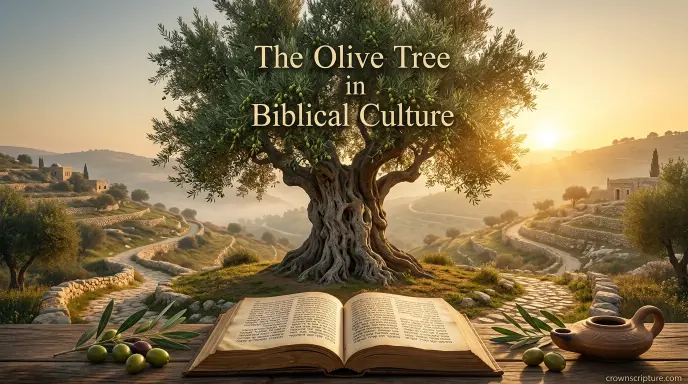
Olive trees were especially important in the ancient lands described in Scripture.
Olives could provide food and oil. Olive oil had many practical uses, including lighting lamps and preparing anointing oil. The olive tree was therefore connected with ordinary life as well as religious practice.
Deuteronomy describes the Promised Land as a place of abundance:
“A land of wheat, and barley, and vines, and fig trees, and pomegranates; a land of oil olive, and honey.”
The olive was therefore part of God’s description of a fruitful land.
Olive trees could also survive for long periods and continue producing fruit. This made the tree a fitting image for flourishing, endurance, and rootedness.
Yet Scripture does not reduce the olive to one simple symbol.
Sometimes olive imagery speaks about blessing. Sometimes it is connected with God’s people. Sometimes it appears in prophetic visions. Sometimes the tree is part of ordinary agricultural life.
This is why biblical symbolism should always be interpreted through context.
15 Bible Verses Connected to the Meaning of Olivia
Because Olivia means “olive,” the most relevant biblical passages are those that mention olive trees, olive plants, olive oil, or important biblical scenes connected with the Mount of Olives.
1. Genesis 8:11 — The Olive Leaf and New Beginnings
“And the dove came in to him in the evening; and, lo, in her mouth was an olive leaf pluckt off: so Noah knew that the waters were abated from off the earth.”
After the flood, Noah received a small but powerful sign.
The olive leaf showed that the waters were going down and that dry land was returning.
For the biblical connection to Olivia, this gives the olive branch an association with hope after judgment and the beginning of a renewed world.
The lesson is important for Christian life. A difficult season does not mean God has abandoned His purposes. Noah had to wait, but God was still working.
An olive leaf can therefore remind us that God’s restoration may begin with something small before we see the full picture.
2. Deuteronomy 8:8 — The Olive as God’s Provision
“A land of wheat, and barley, and vines, and fig trees, and pomegranates; a land of oil olive, and honey.”
Here the olive is part of the description of the Promised Land.
The Israelites were being reminded that God was bringing them into a land capable of sustaining them.
This connects Olivia with the biblical theme of provision.
Christian faith does not teach that every person will have an easy life. But Scripture repeatedly teaches that God is the provider of His people.
The olive can therefore remind us to recognize God’s gifts with gratitude rather than taking them for granted.
3. Judges 9:9 — The Honor of the Olive Tree
“But the olive tree said unto them, Should I leave my fatness, wherewith by me they honour God and man, and go to be promoted over the trees?”
This verse appears in Jotham’s parable.
The olive tree is presented as something valuable and useful. It does not abandon its purpose simply to seek a higher position.
That offers an important lesson about purpose and humility.
A Christian does not need to chase status to have value. God can use a quiet, faithful life.
For someone named Olivia, the olive imagery can become a reminder to value faithful service more than recognition.
4. Psalm 52:8 — A Green Olive Tree in God’s House
“But I am like a green olive tree in the house of God: I trust in the mercy of God for ever and ever.”
This is one of the strongest verses connected with the biblical meaning associated with Olivia.
David contrasts the security of trusting God with the destructive ways of the wicked.
The green olive tree represents flourishing in connection with God’s house.
Notice where David places his confidence:
“I trust in the mercy of God.”
The deepest lesson is therefore not self-confidence. It is God-confidence.
A person may grow, succeed, and become fruitful, but lasting spiritual life comes from trusting the Lord.
5. Psalm 128:3 — Olive Plants Around the Table
“Thy wife shall be as a fruitful vine by the sides of thine house: thy children like olive plants round about thy table.”
This verse connects olive plants with family life and blessing.
The image is warm and domestic. Children are pictured around the family table like young olive plants.
Olive plants suggest growth and future fruitfulness.
The lesson for Christian parents is valuable: children are not simply projects to manage. They are gifts entrusted to parents for loving care, teaching, prayer, and discipleship.
A child named Olivia can therefore be associated with a prayer that she would grow deeply in God’s wisdom and grace.
6. Psalm 52:9 — Waiting on God’s Name
“I will praise thee for ever, because thou hast done it: and I will wait on thy name; for it is good before thy saints.”
Although this verse does not mention the olive directly, it completes the thought surrounding Psalm 52:8.
The green olive tree is connected with trust in God’s mercy.
Then David speaks of praise and waiting.
This gives a deeper spiritual lesson: fruitfulness includes patience.
A tree does not produce fruit instantly. Christian growth also takes time.
7. Jeremiah 11:16 — The Olive Tree as a Serious Warning
“The Lord called thy name, A green olive tree, fair, and of goodly fruit: with the noise of a great tumult he hath kindled fire upon it, and the branches of it are broken.”
This passage is important because it prevents us from turning olive symbolism into a simplistic promise of prosperity.
God compares Israel to a beautiful and fruitful olive tree, but the surrounding context speaks of judgment because of disobedience.
The lesson is sobering.
A beautiful biblical symbol does not guarantee that everyone associated with it is spiritually faithful.
Fruitfulness must be joined with obedience.
For Christians today, this is a reminder that God cares about character, not merely appearance.
8. Hosea 14:6 — Beauty and Restoration
“His branches shall spread, and his beauty shall be as the olive tree, and his smell as Lebanon.”
Hosea 14 speaks about restoration and returning to the Lord.
The olive tree becomes part of a beautiful picture of renewed life.
Its branches spread.
Its beauty returns.
Its fragrance is described as something pleasing.
This connects Olivia with a theme of spiritual restoration.
God does not only expose sin. He also calls people back to Himself.
The gospel is not merely a message about what is wrong with humanity. It is the good news of God’s redeeming grace through Jesus Christ.
9. Zechariah 4:3 — Two Olive Trees
“And two olive trees by it, one upon the right side of the bowl, and the other upon the left side thereof.”
Zechariah’s vision uses olive trees in a symbolic setting.
The trees are connected with a lampstand and oil.
The imagery points readers toward God’s work and provision rather than human strength alone.
This becomes especially clear in the famous statement later in the chapter:
“Not by might, nor by power, but by my spirit, saith the Lord of hosts.”
The connection is powerful for Christian living.
God’s purposes are not accomplished merely through human ability.
A believer named Olivia can take this as a reminder to depend on God’s Spirit rather than personal strength.
10. Zechariah 4:12 — Olive Branches and Oil
“And I answered again, and said, What be these two olive branches which through the two golden pipes empty the golden oil out of themselves?”
The image is one of continual supply.
The olive branches are connected with oil flowing toward the lampstand.
The passage teaches that God’s work depends on His provision.
This gives a valuable spiritual lesson: Christians are called to serve, but they must remain dependent on God.
We cannot manufacture spiritual life through human effort.
11. Zechariah 4:14 — Standing Before the Lord
“Then said he, These are the two anointed ones, that stand by the Lord of the whole earth.”
The vision points toward God’s appointed servants and His sovereign work.
This is another reason to be careful with the name Olivia.
We should not say that the name itself promises that a person will become a certain kind of spiritual leader.
Names do not determine character.
Instead, biblical imagery can become a prayer and reminder of the kind of life we want to cultivate before God.
12. Romans 11:17 — Grafted Into the Olive Tree
“And if some of the branches be broken off, and thou, being a wild olive tree, wert grafted in among them, and with them partakest of the root and fatness of the olive tree;”
Paul uses the olive tree as a powerful theological picture.
His discussion concerns God’s purposes for Israel and the inclusion of Gentile believers.
The image teaches humility.
Believers should not boast as though they created the root or earned God’s grace.
Instead, they have received what God has graciously provided.
This connects the olive imagery with grace, belonging, humility, and God’s redemptive plan.
13. Romans 11:18 — Do Not Boast Against the Root
“Boast not against the branches. But if thou boast, thou bearest not the root, but the root thee.”
This is one of the clearest lessons from Paul’s olive-tree illustration.
The branches do not support the root.
The root supports the branches.
Spiritually, this points toward dependence rather than pride.
Christian identity begins with God’s grace.
For someone exploring Olivia’s biblical meaning, this is an important correction to popular name-meaning traditions. A name may have a beautiful meaning, but a person’s spiritual identity comes from God, not from the letters in their name.
14. Romans 11:24 — God’s Power to Graft
“For if thou wert cut out of the olive tree which is wild by nature, and wert graffed contrary to nature into a good olive tree…”
Paul continues his olive-tree picture to emphasize God’s remarkable work.
The point is not botanical trivia.
The illustration serves his larger argument about God’s mercy and covenant purposes.
The Christian message is ultimately about God’s grace.
God brings people into His redemptive purposes through faith, not because their name is special.
15. Revelation 11:4 — Two Olive Trees Before God
“These are the two olive trees, and the two candlesticks standing before the God of the earth.”
Revelation draws on the imagery found in Zechariah.
This shows that olive-tree imagery continues from the Old Testament into the New Testament.
It also reminds us that biblical symbols should be interpreted carefully. Revelation contains highly symbolic visions, and its olive-tree language is connected to that prophetic imagery.
The main lesson for Christian readers is that Scripture has a unified story, with themes and images appearing across different books and periods.
What Does the Olive Symbolize in the Bible?
The Bible does not give one universal meaning to every olive tree.
Still, several important themes appear.
1. Fruitfulness
Olive trees produce valuable fruit.
Psalm 128 connects olive plants with children growing around the family table.
Hosea uses the olive tree in a picture of restored beauty and growth.
This makes fruitfulness an appropriate spiritual theme.
Christian fruitfulness is not simply about success. Jesus teaches that His followers are called to bear fruit that honors God.
2. God’s Provision
Olive oil was a valuable resource in the ancient world.
Deuteronomy includes olive-producing land among the blessings of the Promised Land.
The image reminds us that God cares about the practical needs of His people.
Christians can respond with gratitude and responsible stewardship.
3. Restoration and Hope
Genesis 8 gives the olive leaf a memorable place in the story of Noah.
After a devastating flood, the leaf became a sign that the waters were receding.
The Bible does not call the leaf a universal symbol of peace in every passage, but the scene naturally carries a message of renewed hope.
4. Spiritual Dependence
Romans 11 uses the olive tree to teach dependence on the root.
The Christian life is not self-created.
We depend on God’s grace.
This is one of the most important lessons connected with the olive imagery.
5. Anointing and Consecration
Olive oil was used in biblical worship and anointing.
Kings and priests could be anointed with oil.
This connects the olive with dedication to God’s purposes.
However, Christians should not assume that simply naming a child Olivia spiritually consecrates that child.
A name can express a parent’s hope, but genuine dedication to God involves faith, worship, obedience, and discipleship.
Olivia and the Mount of Olives
There is another beautiful New Testament connection.
The Mount of Olives appears repeatedly in the life and ministry of Jesus.
Jesus taught near the Mount of Olives. He traveled through the area with His disciples. Before His crucifixion, He went to pray in Gethsemane.
Luke describes Jesus going to the Mount of Olives according to His custom:
“And he came out, and went, as he was wont, to the mount of Olives; and his disciples also followed him.”
This setting becomes especially meaningful because Jesus prayed there during the final hours before His arrest.
The Mount of Olives therefore connects the olive theme with prayer, surrender, suffering, obedience, and trust in the Father.
That is a deeper connection than simply saying Olivia means peace.
The Christian life includes peaceful seasons, but it also includes moments when we must pray, “Not my will, but thine, be done.”
The olive imagery can remind believers that faithfulness matters even when obedience is costly.
Is Olivia’s Meaning “Peace” in the Bible?
You may see websites say that Olivia means “peace.”
This needs clarification.
The direct linguistic meaning of Olivia comes from oliva, meaning olive or olive tree. The association between the olive branch and peace comes from the story of Noah and later cultural tradition.
Therefore, it is better to say:
Olivia means “olive” or “olive tree,” and the olive has biblical associations with hope, restoration, fruitfulness, blessing, and peace-related imagery.
That is more accurate than saying:
“The Hebrew meaning of Olivia is peace.”
There is no biblical basis for that claim.
This distinction matters because Christian content should value truth over attractive but unsupported name meanings.
Is Olivia a Good Christian Name?
Yes, Olivia can be a meaningful Christian name.
The Bible does not command Christians to use only names that appear in Scripture.
What matters most is the faith, character, and life of the person who bears the name.
The olive imagery gives Christian parents several beautiful themes to pray over a child:
- May she remain rooted in God.
- May she grow in wisdom.
- May she become spiritually fruitful.
- May she depend on God’s grace.
- May she bring hope to others.
- May she walk in obedience.
- May she reflect Christ’s love.
- May she remain humble.
- May she trust God through difficult seasons.
These are biblical hopes even though Olivia itself is not a biblical personal name.
Biblical Themes Connected to Olivia
Growth
Trees grow slowly.
This provides a useful picture of discipleship.
A Christian does not become mature overnight.
Spiritual growth takes time, teaching, prayer, correction, obedience, and dependence on the Holy Spirit.
Fruitfulness
God wants His people to bear spiritual fruit.
Galatians 5:22–23 describes the fruit of the Spirit, including love, joy, peace, patience, kindness, goodness, faithfulness, gentleness, and self-control.
This is a better goal than simply being successful.
Faith
Psalm 52:8 connects the green olive tree with trust in God’s mercy.
The lesson is simple:
Stay rooted in God.
Faith is not merely agreeing with facts about God. It involves trusting Him.
Grace
Romans 11 uses grafting imagery to teach humility.
We receive God’s grace.
We do not earn the right to boast.
That makes the olive tree a useful reminder of the gospel.
Hope
The olive leaf in Genesis 8 appears after a long season of judgment and waiting.
Sometimes hope begins with a small sign.
Christians can remember that God’s timing is not the same as ours.
Prayer
The Mount of Olives is connected with some of Jesus’ most significant moments of prayer.
This makes prayer another meaningful devotional theme for the name Olivia.
A person can grow by learning to bring fear, questions, decisions, and suffering before God.
Common Misconceptions About Olivia’s Biblical Meaning
Misconception 1: Olivia is a Hebrew biblical name
It is not.
Olivia has Latin roots.
Misconception 2: Olivia appears in the Bible
There is no person named Olivia recorded in Scripture.
Misconception 3: Olivia directly means “peace” in Hebrew
There is no basis for this Hebrew claim.
The name is connected to the Latin word for olive.
Misconception 4: The Bible gives Olivia a guaranteed spiritual destiny
It does not.
A name does not determine a person’s character or relationship with God.
Misconception 5: Every olive reference is symbolic
This is also incorrect.
Sometimes the Bible simply discusses olive trees, fruit, or oil as part of everyday life.
Good interpretation considers the context.
Practical Christian Lessons From the Meaning of Olivia
1. Stay Rooted in God
A tree needs roots.
Christians need spiritual roots as well.
Prayer, Scripture, fellowship, worship, and obedience help believers remain grounded.
2. Be Patient With Spiritual Growth
Trees take time to grow.
Do not become discouraged because spiritual maturity feels slow.
God often works through ordinary, repeated faithfulness.
3. Produce Good Fruit
A meaningful Christian life is not measured by a beautiful name.
It is seen in character.
Ask God to produce love, patience, faithfulness, kindness, and self-control in your life.
4. Trust God’s Provision
The olive was a valuable part of the ancient economy.
Remember God’s goodness in ordinary blessings.
Food, family, work, relationships, opportunities, and daily strength can all become reasons for gratitude.
5. Choose Humility Over Pride
Romans 11 gives one of the strongest warnings connected with the olive tree.
Do not boast.
Remember the grace that supports you.
6. Bring Your Difficulties to God
Jesus prayed on the Mount of Olives before His arrest.
His example teaches us that prayer is not only for peaceful moments.
Pray when you are afraid.
Pray when you are confused.
Pray when obedience is difficult.
7. Give Your Life to God’s Purposes
The olive imagery in Scripture often appears around God’s larger purposes.
Your life has value when it is surrendered to Him.
You do not need to become famous to be faithful.
Frequently Asked Questions About Olivia Meaning in Bible
What does Olivia mean in the Bible?
Olivia is not a biblical name and does not have a direct Hebrew or Greek meaning in Scripture. The name comes from the Latin oliva, meaning “olive” or “olive tree.” Its biblical significance comes from the many references to olive trees and olive oil in Scripture.
Is Olivia a biblical name?
No. Olivia does not appear as a personal name in the Bible. However, the olive tree is frequently mentioned throughout Scripture, making Olivia a name with a meaningful biblical association.
What does the olive tree symbolize in the Bible?
The olive tree can be connected with several themes, including fruitfulness, blessing, beauty, provision, restoration, and God’s covenant purposes. The exact meaning depends on the biblical passage and its context.
Does Olivia mean peace?
Olivia directly comes from the Latin word associated with the olive. The olive branch later became strongly associated with peace, especially through the story of Noah’s dove returning with an olive leaf. Therefore, peace is a traditional association, rather than a direct Hebrew meaning of Olivia.
Is Olivia a good Christian name?
Olivia can be a meaningful Christian name. Although it is not found in Scripture, its connection with the olive tree allows parents to associate it with biblical themes such as fruitfulness, hope, restoration, humility, and dependence on God.
What Bible verse is best connected to Olivia?
Psalm 52:8 is one of the strongest choices because it directly compares a faithful person to a green olive tree in God’s house and connects the image with trust in God’s mercy.
What does an olive tree represent in Romans 11?
Paul uses the olive tree as an illustration involving God’s covenant purposes, Israel, and Gentile believers. The passage especially teaches humility and dependence on God’s grace. It should not be reduced to a simple statement that the olive tree always represents one specific group.
Is Olivia a name with Christian meaning?
Olivia is not specifically a Christian or biblical name by origin. Its Christian significance comes from the biblical themes associated with the olive tree, including fruitfulness, provision, restoration, prayer, and God’s grace.
A Short Prayer for Someone Named Olivia
Father, thank You for the gift of life and for the person who bears the name Olivia. Help her to grow like a healthy tree, rooted deeply in Your truth and strengthened by Your grace.
Give her wisdom when she makes decisions. Give her courage when life is difficult. Teach her to trust You rather than depend only on her own strength.
Make her life fruitful in ways that honor Christ. Let her show love, patience, kindness, faithfulness, and humility.
When she faces uncertain seasons, remind her that You are still working. When she is afraid, teach her to pray. When she succeeds, keep her humble. When she struggles, give her hope.
May her life point others toward Jesus Christ.
In Jesus’ name, amen.
Conclusion:
The most accurate answer to “Olivia meaning in Bible” is simple:
Olivia is not a biblical personal name. It comes from the Latin word for “olive” or “olive tree.” But the olive tree has rich biblical connections that can provide meaningful Christian reflection.
Scripture connects olive imagery with provision, fruitfulness, beauty, restoration, humility, dependence, and God’s gracious purposes.
Perhaps the most beautiful connection is found in Psalm 52:8:
“But I am like a green olive tree in the house of God: I trust in the mercy of God for ever and ever.”
That is a better spiritual goal than simply having a meaningful name.
To be rooted in God.
To trust His mercy.
To grow in faith.
To bear good fruit.
And to remain faithful through every season.
A name can remind us of a hope, but only God can transform a life.
So whether Olivia is your name, your daughter’s name, or simply a name you are considering, let its olive-tree connection point you beyond the name itself—to the God who gives growth, grace, mercy, and hope.
And when life becomes difficult, remember the lesson of the olive tree: deep roots matter. Growth takes time. Fruitfulness requires patience. And God’s grace is always greater than our own strength.
“Trust in the mercy of God for ever and ever.”

I am Naqash Ayub, the writer behind CrownScripture, where I create clear, thoughtful, and Bible-centered content to encourage spiritual growth. My goal is to make Scripture easy to understand through trustworthy, meaningful, and reader-friendly articles that inspire faith and daily living.